PresentationTimer

Panel discussion timer

Panel Discussion Timer for Moderators, Speakers, and Live Q&A

Run intros, speaker rounds, audience questions, and closing remarks from one shared timing room. Keep host controls private, give moderators a read-only flow view, and let speakers follow a clear countdown.

Moderator view
Speaker display
Q&A agenda
Live timing
See panel workflow
Live panel workflowHost + moderator
Moderator, speakers, and shared countdown connected in one panel discussion timing room

Real panel situations

Panel discussions run long when timing is invisible.

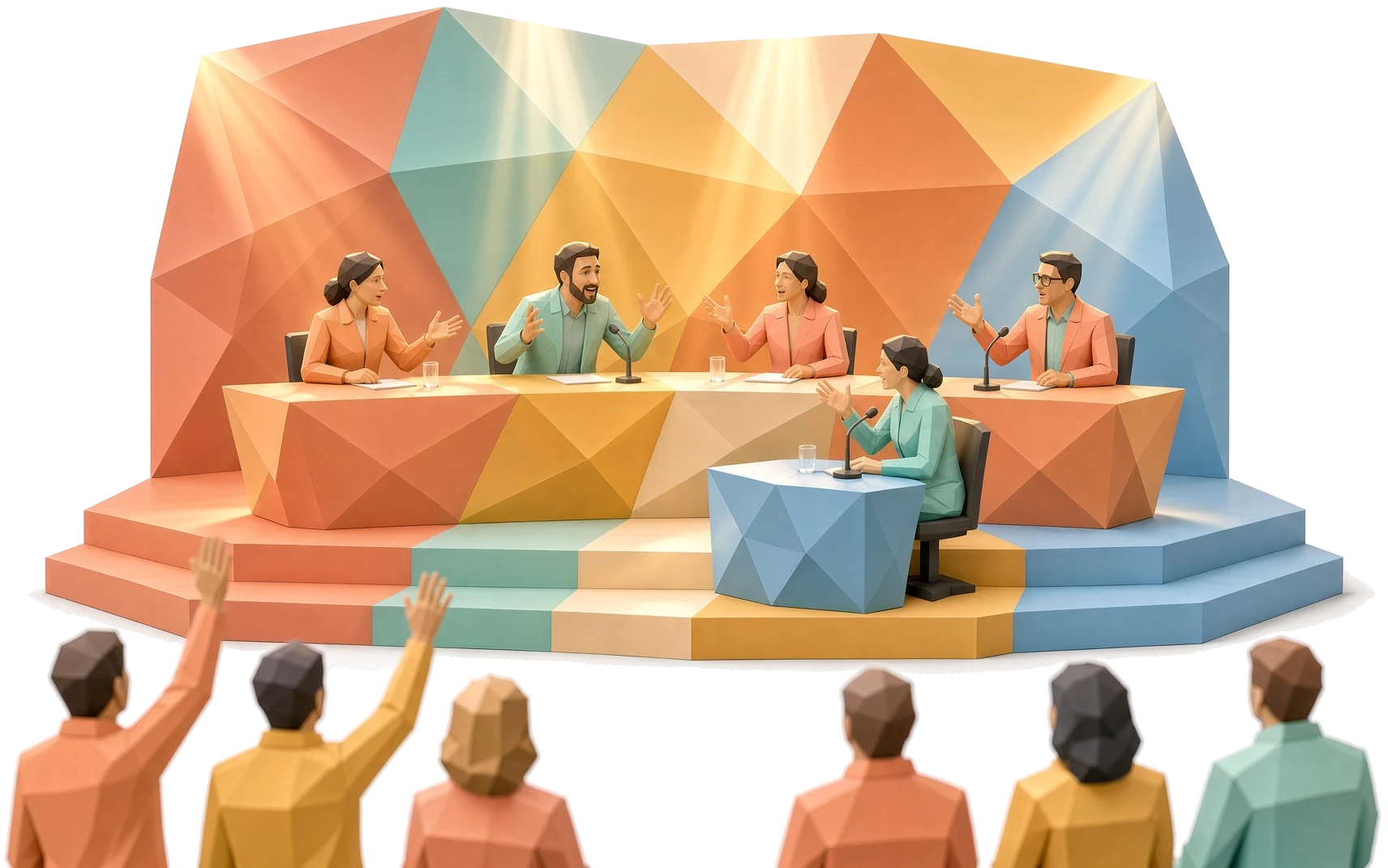
A panel is harder to pace than a single presentation. The moderator needs to guide the conversation, panelists need to know when to wrap up, and audience Q&A can change the rhythm of the session without warning.

That is where a generic countdown timer starts to break down. One timer on one laptop does not help a moderator, a speaker, a producer, and a room display stay aligned at the same time.

A shared panel discussion timer gives the room one visible source of time instead of one hidden device.

a conference panel where the moderator needs to keep multiple speakers on schedule
a fireside chat that moves from opening questions into live audience Q&A
a breakout panel where the host wants private timing controls and a clean public display
a webinar panel where the producer, moderator, and speakers all need the same timing signal
a live discussion session where wrap-up cues should be visible without interrupting the conversation
a moderated discussion that needs to land closing remarks on time

A practical panel flow

The host controls timing while the moderator watches the flow.

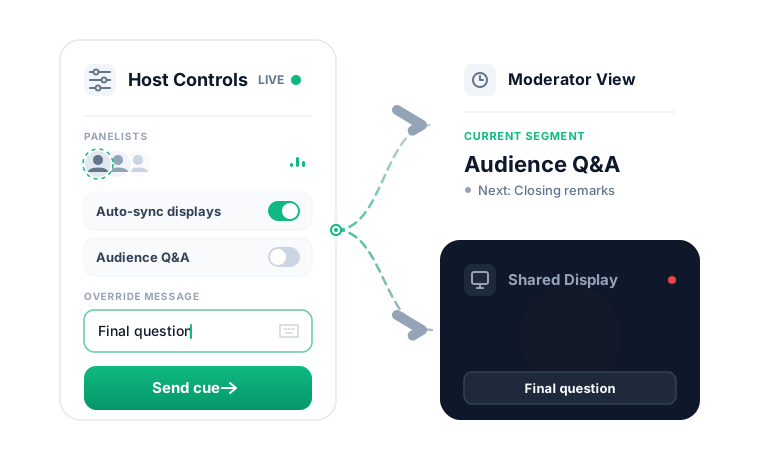
Private host controls beside moderator view and shared panel countdown

In many panel discussions, the timing problem starts once the first answer runs long. The moderator is tracking the conversation, the panelists are focused on the audience, and the room still needs a visible time signal.

PresentationTimer keeps those roles clear. The host opens the control view. The moderator follows a read-only panel monitor. The room or stream sees a clean timer display.

That display can live on a stage screen, confidence monitor, webinar share, or a browser window near the moderator desk.

The host can adjust timing live without exposing settings, edit UI, or room controls to the rest of the panel.

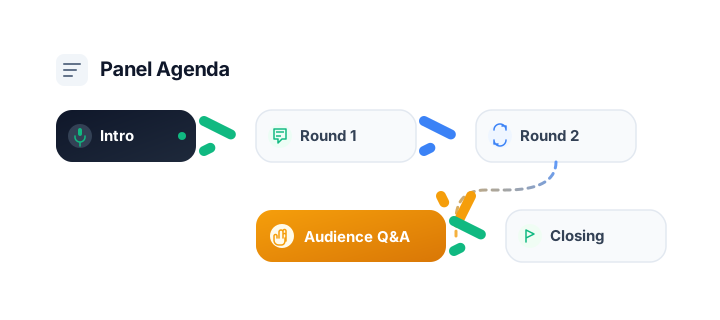
When the session has multiple parts, the room can hold a lightweight agenda for intro, speaker rounds, Audience Q&A, and closing remarks.

The result is a calmer discussion: moderators see the flow, speakers stay aware of pacing, and wrap-up cues stay visible when the conversation starts slipping.
Why PresentationTimer

Built for moderator-led panel timing.

A panel discussion needs more than one visible countdown. It needs shared timing across the host, moderator, speakers, and the room itself.

PresentationTimer separates those jobs cleanly so the moderator can focus on the discussion and the host can still manage timing with precision.

That makes it more useful for live panels than a generic timer that only shows one clock and nothing else.

A moderator-friendly timing workflow

A panel discussion is harder to pace than a single talk. PresentationTimer gives moderators a read-only room view so they can follow the current segment, next segment, and live room status without taking control away from the host.

Host controls stay private

The host can start, pause, reset, switch agenda segments, and send display messages from the host view while the visible timer stays clean for panelists and the audience.

Speakers and audience follow the same clock

Open the shared timer on a stage screen, confidence monitor, browser window, or webinar share so panelists, moderators, and producers stay aligned on time.

Use display messages for quiet wrap-up cues

Display messages help with cues like final question, wrap up, or closing next without forcing the moderator to break the flow of the discussion every time.

How it works

Set up a panel discussion timer room in four practical steps.

The flow follows the way panels actually run: create the room, prepare the segments, share the right views, and adjust live once the audience starts asking questions.

You can use one countdown for a short fireside chat or build a small agenda for intro, panel rounds, Audience Q&A, and closing.

1

Create a panel discussion timer room

Start one room for the full panel instead of rebuilding separate timers for every phase of the session.

2

Build the panel agenda

Add timers for the introduction, speaker rounds, Audience Q&A, and closing remarks so the whole discussion lives in one room.

3

Share the right room views

Keep the host controls private, open the moderator view for the moderator or producer, and share the timer display where panelists or the room can see it.

4

Run live Q&A with visible timing

Adjust segments live, send wrap-up cues, and move into closing remarks without losing the room to timing confusion.

Panel agenda timing from intro to speaker rounds, Audience Q&A, and closing remarks

Agenda flow

Run intro, speaker rounds, Audience Q&A, and closing in one panel room.

A panel discussion is rarely one fixed countdown. A moderator may need an introduction timer, multiple speaker rounds, a question block, and a closing segment before the room ends.

Instead of resetting one timer over and over, PresentationTimer keeps those segments inside one agenda room.

That makes the room easier to manage when a question runs long, a speaker needs a shorter answer, or the moderator wants to tighten the final minutes of the session.

Role views

One panel, four timing views.

Panel timing works better when each role sees the right information. The host needs controls, the moderator needs flow visibility, speakers need pacing cues, and the room needs a readable timer.

Host view

The host controls the room, timing, agenda flow, and live display cues.

Moderator view

The moderator follows the current segment, next segment, room status, and active message without taking control away from the host.

Speaker view

Each speaker can follow the remaining time, warning state, and what comes next.

Display view

The room or stream sees a clean countdown without host controls, settings, or edit UI.

Display messages

Use display messages for quiet moderator cues.

Panel discussions often need short cues that should be visible without breaking the conversation. A moderator or host can use display messages to guide the room without another spoken interruption.

This is especially useful during Audience Q&A, when the room needs a visible signal that the panel is moving toward the end even if the discussion is still active.

Final question
Wrap up
1 minute left
Closing next

Comparison

Use a panel discussion timer built for live discussion flow.

Phone timer

Private, easy to miss, and too isolated for a moderator-led panel discussion.

Generic countdown timer

Useful for one visible clock, but weak when a panel has multiple segments, multiple speakers, and live audience Q&A.

Run-of-show notes

Helpful for planning, but they do not give moderators, speakers, and the room a shared live timing signal.

PresentationTimer

A panel discussion timer with host controls, moderator view, speaker display, display messages, and simple agenda timing in one room.

Ready to time a panel?

Run your next panel with visible timing and moderator control.

Create one panel timer room, share the right views, and keep the discussion moving without losing the room to timing confusion.

The host controls timing, the moderator follows the flow, and the display keeps the panel aligned when the live conversation starts to stretch.

FAQ

Panel discussion timer questions

What is a panel discussion timer?+

A panel discussion timer is a visible timer used to keep a moderated discussion, fireside chat, breakout panel, or audience Q&A session on schedule. PresentationTimer adds host controls, moderator view, speaker display, warning states, and simple agenda timing.

Can I use this for moderated Q&A?+

Yes. PresentationTimer works well for moderated Q&A because the host can control timing, the moderator can follow the room flow, and the display can show visible wrap-up cues without constant verbal interruption.

Can moderators see timing without controlling the room?+

Yes. The moderator view is designed as a read-only room monitor. It helps moderators and producers follow the current segment, next segment, room status, and active display message without taking control away from the host.

Can one room handle intro, speaker rounds, and audience questions?+

Yes. A single room can hold a lightweight panel agenda, including intro, panel rounds, Audience Q&A, and closing remarks.

How is this different from a generic countdown timer?+

A generic countdown timer usually gives you one visible clock. PresentationTimer is built for live timing workflow: host controls, moderator monitoring, speaker timing, display messages, shared display, and agenda flow inside one room.

Can I use it for online panels or webinar panels?+

Yes. You can use the display in a browser window, shared screen, producer laptop, or confidence monitor. It works for in-person panels, hybrid sessions, and online panel discussions where multiple people need the same timing signal.